Guides / App development
App or website: which does your business need?
Most small businesses need a website first, and an app only if customers will use it often enough to keep it on their phone. A website is found through Google and works on every device with nothing to install. An app earns its place when you need the phone's hardware, offline use, push notifications, or something people open several times a week.
- Website first: it is found on Google and needs no install
- Build an app when people will use it often, or it needs the phone's hardware
- A web app covers logins, bookings and admin without the app stores
What is the difference in practice?
A website lives at an address. Anyone can open it in a browser on any phone or computer, and Google can read it and send people to it.
An app is software installed on a phone from the App Store or Google Play. It can use more of the phone, it works faster once it is installed, and it sits on the home screen. But someone has to decide to download it first, and it has to be built, submitted for review and kept up to date for each platform.
They are good at different things. The question is not which is better, but what you need customers to do.
When is a website enough?
For most local and service businesses, a website covers everything:
- telling people what you do, where, and how to reach you;
- being found on Google by people who have never heard of you;
- taking bookings, quote requests or orders;
- selling products with a cart and card payments;
- showing reviews, photos and past work.
None of that needs an app. A customer who wants a plumber once a year will not install a plumber's app, and should not have to.
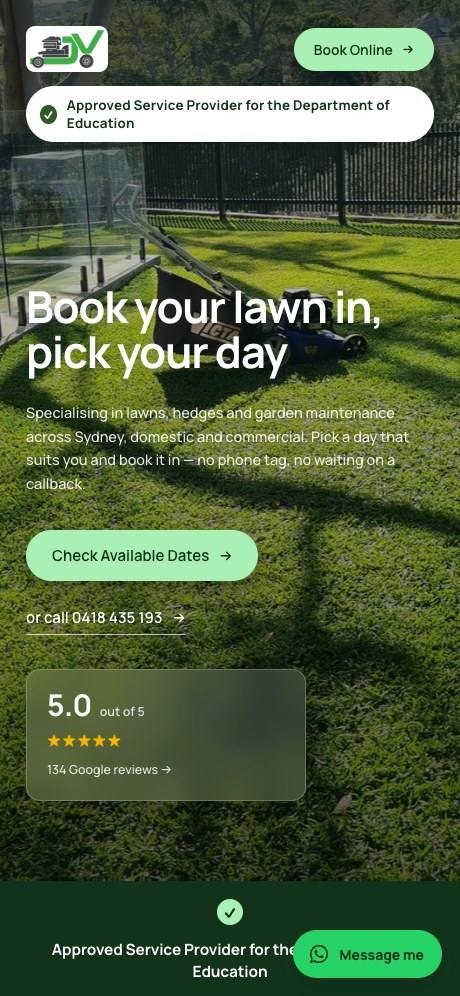
A website can also do more than people expect. Joe Vu Lawn Service, a site we built, lets customers pick a day and time from the owner's real availability and send photos of the lawn with the booking. Sherwood Pottery takes card payments through its own online store. Both run in a browser.
When does an app make sense?
When at least one of these is true:
- People will use it often. Several times a week, not twice a year. Training, tracking, habits, a tool used on the job.
- It needs the phone's hardware. The camera, microphone, motion sensors, Bluetooth or GPS, used in ways a browser handles poorly.
- It has to work offline. On a building site, on a boat, or in the back country with no reception.
- Push notifications are central to it. Not marketing, but alerts the user actually wants.
- Speed and feel matter. Real-time audio, games and anything where a delay ruins it.
- The app is the product. You are selling the software itself.
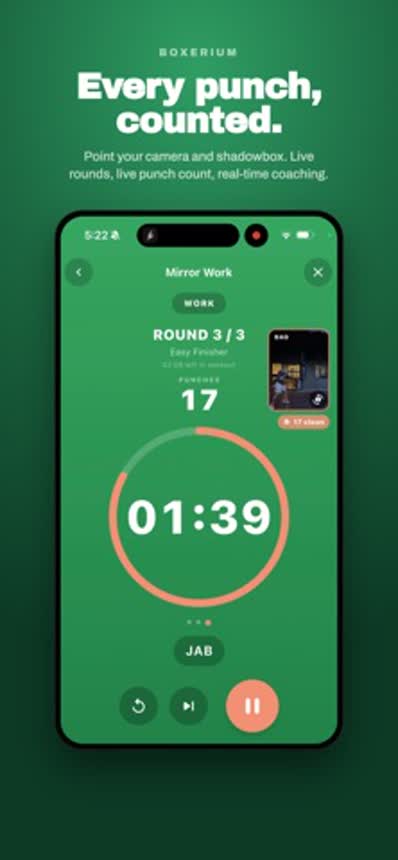
Our own apps are examples of the second and fifth. Boxerium calls out boxing combinations aloud and uses the camera to watch your form. Singium processes your voice in real time. Neither would work properly as a website.
What about a web app?
This is the middle option, and it is often the right one for a business. A web app is a website that behaves like software: you log in, it remembers your data, and you do things in it, not just read. Online banking in a browser is a web app. So is a booking system, an owner's admin area, or a customer portal.
A web app has most of the advantages of a website. There is one version for every device, nothing to install, no store review, and updates go live at once. It can be added to a phone's home screen, and some features work offline.
It has limits. Access to phone hardware is narrower than a native app gets, it is not listed in the app stores, and heavy real-time work is better done natively. Our game Hockeyium is playable in a browser, which shows how far the web can go, but for most businesses the relevant examples are simpler: bookings, orders, quotes and admin.
If your idea is "customers log in and do something", ask whether it could be a web app before pricing a native one.
How do the costs compare?
A website is the cheapest of the three by a wide margin. Published NZ guides put a small business site in the low thousands of dollars up front, or a modest monthly fee. See how much a website costs in NZ.
A native app costs more, because it is custom software. Listed NZ developer rates mean even a simple one usually runs into the tens of thousands. See how much it costs to build an app in NZ.
A web app sits between them, depending on what it does. A booking calendar added to a website is a small job. A full customer portal is closer to an app.
Running costs follow the same order. An app has store fees, including the 99 USD a year Apple Developer Program, and needs updating as phones change.
How do customers find each one?
This is the part people overlook. Websites are found by search. Someone types what they need, and Google shows pages that answer it. That is how a new customer who has never heard of you arrives.
Apps are mostly found by people who already know about them. App store search exists, but it is crowded, and nearly everyone who downloads a small business's app was sent there by the business itself: a link, a QR code at the counter, a sign-up prompt.
So an app without a website has almost no way to be discovered. Apple expects one anyway: its App Review guidance says every app needs a link to user support with current contact details and a link to a privacy policy. In practice, every app needs a website, and not every website needs an app.
Can I just put my website inside an app?
No, not as it stands. Apple lists this among its common reasons for rejecting apps.
Websites served in an iOS app, web content that is not formatted for iOS, and limited web interactions do not make a quality app.
Apple also turns down apps that do not offer enough lasting value.
An app has to do something an app is for. If the only reason for wanting one is to have an icon on customers' phones, a web app that can be added to the home screen gets you the icon without the store.
Can I start with a website and add an app later?
Yes, and it is the order we would recommend for almost every business. A website is quicker and cheaper to build, starts bringing in customers through search, and shows you what people actually want to do.
If they keep coming back to do the same task, and a browser is holding them back, that is the signal to build an app. By then you know which features matter, which makes the app smaller and cheaper. The work on the website is not wasted, because the app will need it for support, privacy and promotion.
When you do build, one codebase can cover both iPhone and Android. Flutter, for example, builds for mobile from a single codebase. We compare the approaches in Flutter vs native apps.
How do I decide?
| If you need to... | Start with |
|---|---|
| Be found by new customers on Google | Website |
| Show services, prices, photos and reviews | Website |
| Take bookings, quotes or orders | Website with a booking system or store |
| Let customers or staff log in and manage things | Web app |
| Use the camera, sensors or real-time audio | App |
| Work with no reception | App |
| Give people a tool they use most days | App |
| Sell the software itself | App, plus a website to promote it |
If you answered "website" to the first few and "app" to none, you have your answer. If one of the app rows is the whole point of your idea, an app is justified, and the next thing to read is what goes into publishing an app on the App Store.
We build both, so we have no reason to steer you to the expensive one. Our web design and app development pages show how each works.