Guides / SEO
Local SEO for tradies in New Zealand
Local SEO for a tradie comes down to three things: a complete Google Business Profile, a website with a page for each service you do and the area you cover, and a steady flow of real reviews. Get those right and you show up when someone nearby searches "plumber Hamilton" or "electrician near me".
- Set up a Google Business Profile as a service-area business and fill in everything
- Build one page for each service, naming the area you cover
- Ask every customer for a review, with a direct link
What is local SEO, in plain terms?
When someone searches for a trade, Google shows two kinds of free result: a map with a short list of local businesses, and a list of websites underneath. Local SEO is the work of getting into both for the searches your customers make.
Google says local results come down mainly to relevance (does this business do what was searched for), distance (how close is it), and prominence (how well known is it). You cannot move your depot, so the work is on relevance and prominence.
Which searches should a tradie go after?
Not "plumber" on its own. People search for a job and a place:
- Trade plus town or suburb. "Electrician Tauranga", "builder Lower Hutt", "roofer Invercargill".
- A specific job. "Hot water cylinder replacement Hamilton", "heat pump install Dunedin", "retaining wall builder Whangārei".
- Urgent jobs. "Emergency plumber Christchurch", "blocked drain North Shore".
- Near me. Google works out where the person is, so you rank for these by being relevant and close, not by writing "near me" on your site.
To find the real ones, start typing your trade and town into Google and read the suggestions. Those are searches people are making. Write down the ones that match jobs you want, and put the best-paying jobs first.
How should a tradie set up a Google Business Profile?
Most tradies travel to the customer, so set the profile up as a service-area business: remove the address and list the areas you cover. Google allows up to 20 areas. Your home address stays private.
Then fill in everything else. Pick the most specific primary category. List every service with a line about each. Add photos of finished jobs regularly; before and after pairs work well. Keep the hours right, including whether you do call-outs after hours.
Our step-by-step guide on getting your business on Google covers verification, which is where most people get stuck.
What pages should a tradie's website have?
One page for each service, each built around one search. A single "Services" page with a bullet list gives Google nothing to rank for "switchboard upgrade Palmerston North".
Each service page should have:
- a title with the service and the place, then your business name;
- a few paragraphs on what the job involves and what affects the price;
- photos of that kind of job, done by you;
- the areas where you do it;
- a phone number people can tap and a quote form.
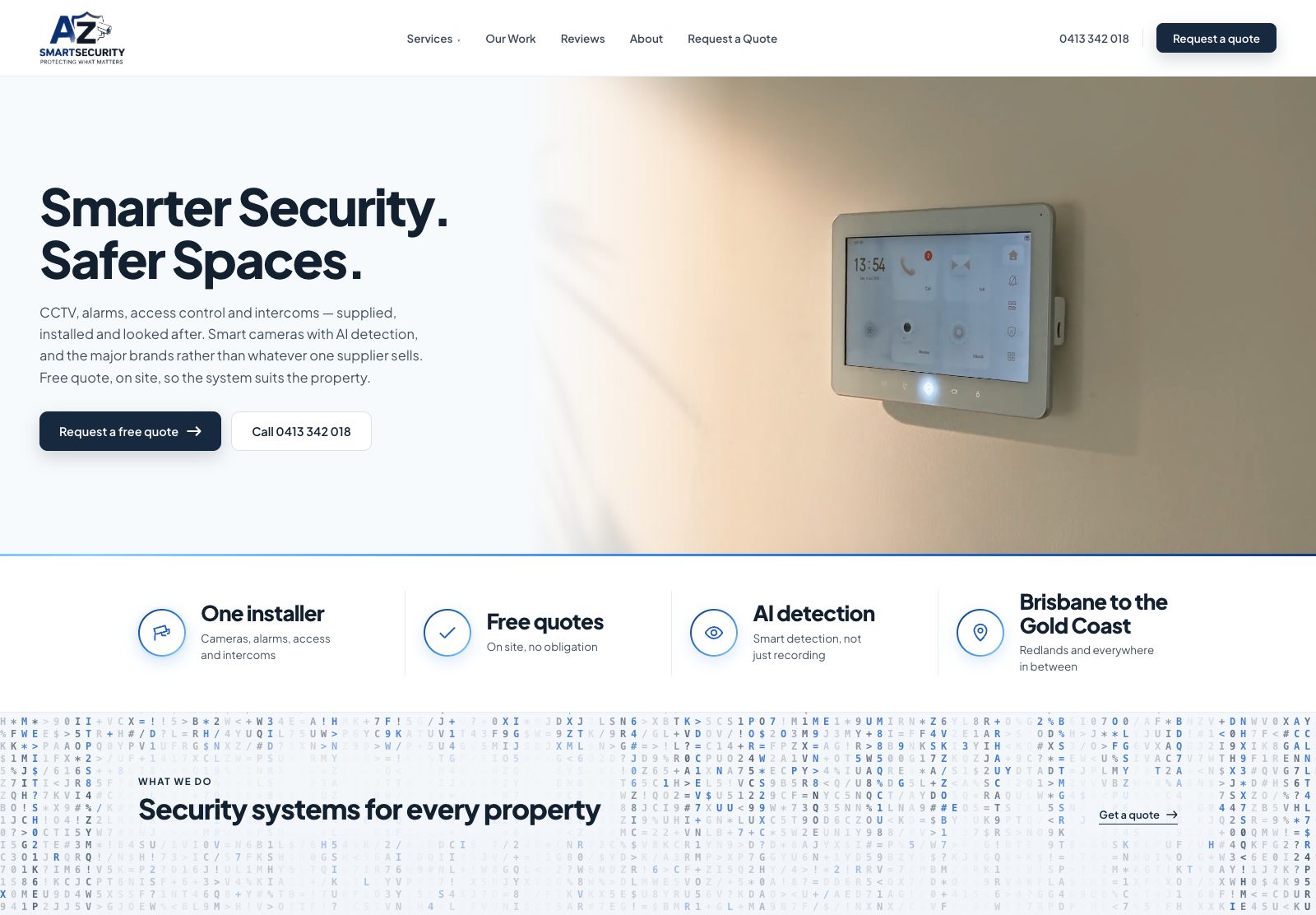
Two sites we built work this way. A-Z SmartSecurity, a security installer, has a separate page each for CCTV, alarms, access control and intercoms, and every page leads to a quote request. Joe Vu Lawn Service has a page per service, each with its own title, real job photos and live Google reviews. Both are in Australia, and the method is the same here.
For the rest of the site, see what pages a small business website needs.
Should I make a page for every suburb?
Only for places where you have something real to say. A page for each main area you work in, with jobs you have done there and details specific to it, is useful. Forty pages that are identical apart from the suburb name are not. Google treats those as spam, and they can drag the whole site down.
A good rule: if you could not write three true sentences about working in that place, it does not get a page. Mention it in your service-area list instead.
How do reviews fit in?
Reviews feed prominence, and they are what a customer reads when choosing between the three businesses on the map. A tradie with a steady run of recent reviews looks busy and trusted.
Ask after every job, by text, with a direct link to your review form. Do not offer anything in return: Google's policy bans incentives, and so does asking only your happy customers. Our guide on how to get more Google reviews has the wording and the rules.
Do directory listings still matter?
A little. New Zealand has plenty of places a tradie can be listed, such as Yellow, NoCowboys, Builderscrack, Neighbourly and Finda. They bring the odd job directly, and they help Google confirm that your business is real and where you say it is.
The rule is consistency. Use the same business name, phone number and area on every one, matching your Google profile and website. An old mobile number on a forgotten listing does more harm than no listing. You do not need to pay for premium listings for this to work.
What photos should I use?
Your own. Stock photos of a smiling man in a hard hat tell a customer nothing, and Google can only learn about your work from pictures of your work.
Take a photo before and after each job. On the website, name the file for what it shows, such as "new-cedar-fence-rolleston.jpg", and write a short description for it. Google's SEO Starter Guide explains that this descriptive text is how Google understands an image. Only name a place if the photo was really taken there.
How long before it brings in work?
Usually a few months, and sooner in a small town than in Auckland. Fixes to the profile show quickly; ranking for the competitive searches takes longer. Our guide on how long SEO takes breaks down the timeline.
If you need jobs this month while that builds, look at where people are already asking for a tradie: local Facebook groups, Neighbourly and job boards. Our lead alerts for tradies email you those posts as they appear.
What should a tradie skip?
- Buying links or "SEO packages" that promise hundreds of backlinks. At best they do nothing.
- Stuffing the business name with keywords on your Google profile. It can get the profile suspended.
- Paying for reviews or writing your own. It breaks Google's rules, and under the Fair Trading Act reviews must be genuine.
- Anyone who guarantees the top spot. Nobody controls Google's results.
- Dozens of copied suburb pages. See above.
That leaves a short list of things worth doing well: the profile, the service pages, the photos and the reviews. If you would rather be on the tools, it is the work we do each month in our SEO service, with a version aimed at Auckland suburbs.